Honda Pilot Oil Capacity, Type, & How to Reset oil Life (2003-2026)
One of the six cars in my garage is a Honda Pilot, and I change the engine oil for all six of them myself.
This is something no one ever tells you when you start changing your own oil. Every car is different!
It’s not just the brand; the oil capacity, viscosity, filter size, and even the type of oil that can be used also vary.
I learned the hard way when I almost overfilled the oil because I relied on the wrong specifications from memory. Six cars, six different oil requirements. None of them is interchangeable.
So, before you work on your Pilot, make sure you use the exact numbers recommended by the manufacturer—not what you used on your previous car.
In this guide, I’ll cover everything about changing the oil in your Honda Pilot, including how much oil your Pilot needs, the type of oil, and recommendations for a good oil brand for your SUV.
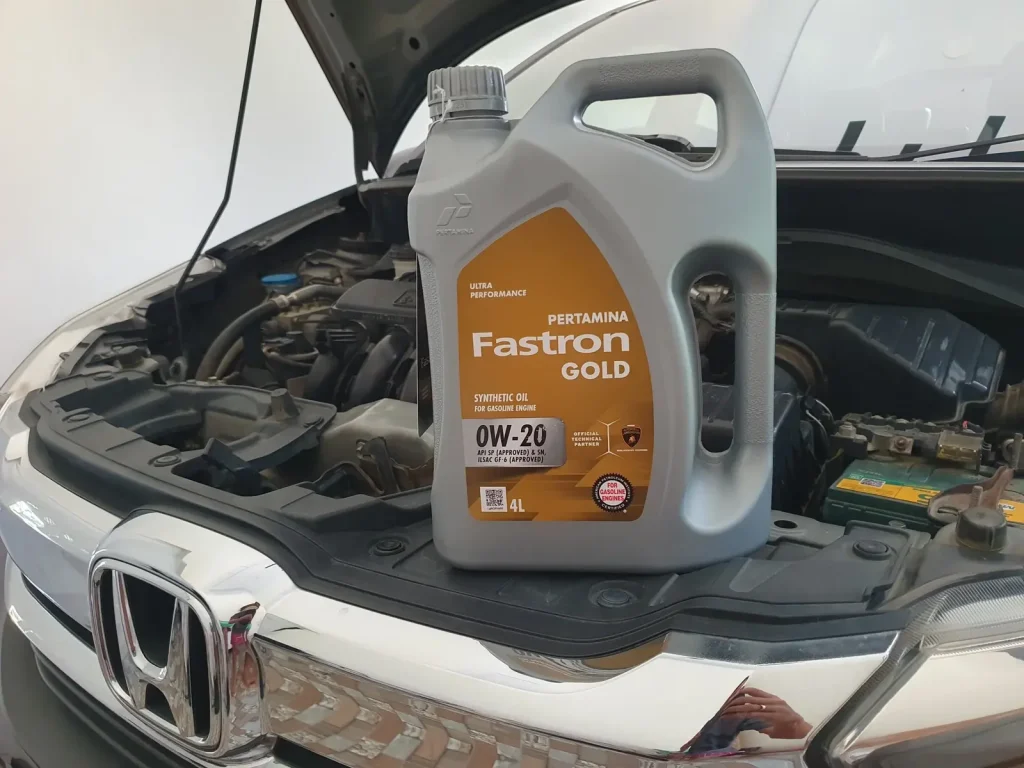
Quick Reference: Oil Capacity & Type Chart
All capacities below are for oil changes that include a filter replacement — which should be every single time.
| Model Year | Oil Capacity (w/ Filter Change) | Recommended Type |
|---|---|---|
| 2023 – 2026 Honda Pilot | 5.8 qt (5.5 L) | 0W-20 |
| 2016 – 2022 Honda Pilot | 5.7 qt (5.4 L) | 0W-20 |
| 2012 – 2015 Honda Pilot | 4.5 qt (4.3 L) | 0W-20 |
| 2005 – 2011 Honda Pilot | 4.5 qt (4.3 L) | 5W-20 |
| 2003 – 2004 Honda Pilot | 5.1 qt (4.8 L) | 5W-20 |
Data sourced from the Honda Pilot Owner’s Manual across all model generations.
Understanding Oil Viscosity/Weight
When you go shopping for motor oil, I’m sure you’ll see labels with a combination of numbers and the letter “W,” such as 0W-20, 5W-20, 10W-30, and so on.
Those numbers aren’t random; they tell you exactly how the oil behaves at different temperatures. Choosing the wrong one affects how well your engine is protected from the moment you turn the key.
The “W” stands for Winter, not weight. The number before it describes how the oil flows in cold conditions—the lower the number, the faster it moves through the engine during a cold start. The number after the “W” tells you how thick the oil remains at normal operating temperature.
So 0W-20 flows more freely than 5W-20 when the engine is cold, but both reach a similar viscosity once the engine is fully warmed up. That cold-start difference matters—the first few seconds after startup are when the most engine wear occurs, because the oil hasn’t fully circulated yet.
Honda switched from 5W-20 to 0W-20 starting with the 2012 Pilot. The thinner cold-flow of 0W-20 is better suited to modern, tighter engine tolerances—and it also provides a small fuel economy benefit.
Can I use 5W-30 instead of 5W-20 in my Pilot?
You can safely use 5W-20. However, I don’t recommend it if you don’t live in a state with a hot climate. If you live in Florida, Texas, or Hawaii, I actually recommend upgrading from 0W-20 to 5W-20, because 0W-20 evaporates quite easily in hot weather. Yes, there’s a slight dip in mpg, but some people don’t even notice it.
Quick tip: Check the oil filler cap under your hood — Honda prints the required viscosity directly on the cap.
In addition to the viscosity rating, oil packaging typically also indicates the type of oil based on its base material.
There are three types: fully synthetic, semi-synthetic, and mineral oil.
Which one is best?
Generally, fully synthetic oil offers better quality than the other two types, both in terms of protection and longevity.
High-performance engines like the 3.5L V6 in the Honda Pilot require high-performance oil, especially when working hard—such as towing heavy loads or operating in extreme temperatures.
Semi-synthetic oil is an acceptable middle-of-the-road choice for older first-generation Pilots, but full synthetic oil is the best choice for all models.
Personally, I’ve never used anything other than full synthetic oil for any of my cars; after all, as of today, the price of full synthetic oil has become increasingly affordable.
| Pilot Genration | Recommended Viscosity | Type |
| 4th Gen (2023 – present) | 0W-20 | Full Synthetic |
| 3rd Gen (2016 -2022) | 0W-20 | Full Synthetic |
| 2nd Gen Facelift (2012 – 2015) | 0W-20 | Full Synthetic |
| 2nd Gen (2009 – 2011) | 5W-20 | Full Synthetic |
| 1st Gen (2003 – 2008) | 5W-20 | Synthetic Recommended |
Why does capacity matter?
Oil capacity is one of those specs that’s easy to overlook, until something goes wrong.
If there is too little oil, it will reduce engine lubrication. When the oil level is too low, moving parts do not receive consistent lubrication and overheat more quickly, leading to increased wear.
In severe cases, low oil pressure can cause the engine to shut down on its own as a protective measure, or even worse, lead to catastrophic damage before any warning lights come on.
While at a friend’s shop, I once saw a pickup truck having a rough day—it drove over a road under construction, scraping the underside of the vehicle against a pile of gravel and tearing the oil filter. This caused oil to leak out of the engine; the driver didn’t notice and kept driving for about half a mile. As a result, the cylinder block was scratched, and the crankshaft was bent—they had to disassemble the engine completely!
Too much oil isn’t good either.
When there’s too much oil in the engine, parts that aren’t supposed to be submerged in oil end up getting submerged as well. As a result, the oil gets stirred up and turns into foam.
Foamy oil means there’s air trapped inside, which prevents it from lubricating properly. Additionally, too much oil creates higher pressure, which can cause the gaskets and seals to wear out quickly—usually indicated by oil leaks that make the underside of the engine look dirty and damp.
Given these consequences, it’s important to ensure you use the correct amount of oil in your Honda Pilot.
The Honda Pilot’s oil capacity varies depending on the generation and model year:
- 2023–2026 Honda Pilot: 5.8 qt / 5.5 L
- 2016–2022 Honda Pilot: 5.7 qt / 5.4 L
- 2009–2015 Honda Pilot: 4.5 qt / 4.3 L
- 2005–2008 Honda Pilot: 4.5 qt / 4.3 L
- 2003–2004 Honda Pilot: 5.1 qt / 4.8 L
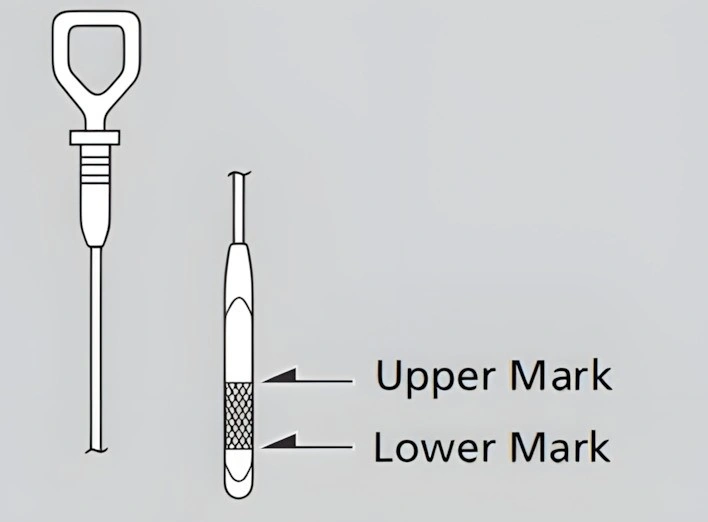
After filling, turn on the engine for a minute and check the dipstick. The oil level should sit between the MIN and MAX marks — ideally closer to MAX but not above it.
Don’t Forget the Filter
Some people assume they can put off changing the oil filter. Usually, you change the oil filter every two oil changes. Two oil changes, one filter change. But I’ll say it loud and clear: “NO!”
Replacing the oil filter at every oil change isn’t optional—it’s the whole point.
Changing the oil without replacing the filter is like taking a shower but not changing your underwear. Bacteria and odors will contaminate your clean body after the shower.
The same goes for the oil filter—it’s called a filter for a reason; its job is to trap fine particles and sludge inside the engine that get carried by the oil.
When you change the oil without replacing the filter, you’re unknowingly mixing fresh oil with dirt and about 200 ml of old oil left in the filter.
I don’t want that to happen. I don’t want the clean, expensive oil I put into the engine to mix with dirt that I could actually prevent by replacing the filter, which costs about the same as two cups of iced coffee.
Yes, a high-quality oil filter costs only $10–$15. It won’t break the bank—it makes no sense to skip it.
Reliable oil filter options for the Honda Pilot include:
- Honda OEM Oil Filter
- Mobil 1 Extended Performance Oil Filter M1-110A
- STP Extended Life Premium
- K&N Select Engine Oil Filter SO-1010
- ACDelco Gold Canister Engine Oil Filter
Change Interval
Honda Pilots are equipped with the Maintenance Minder System, which monitors real driving conditions, including engine temperature, RPM patterns, idle time, and more, to calculate exactly when your oil needs changing. In my opinion, it’s more accurate than any fixed mileage schedule.
The alerts work as follows:
- 15% oil life remaining: Schedule your oil change soon.
- 5% oil life remaining: Change is due — don’t delay.
- 0% oil life: Service is overdue
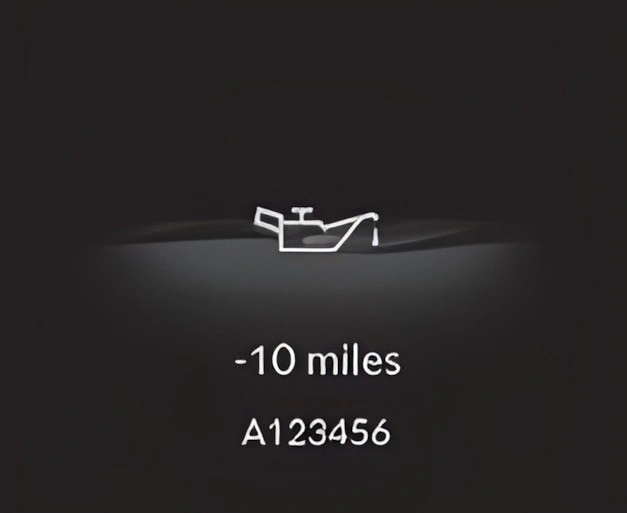
- – 10 miles: The engine oil life has passed. Do it now, or damage will happen
However, some people prefer to track mileage instead. This is usually due to specific driving scenarios.
Use these general guidelines if you prefer to track mileage.
| Driving Conditions | recomended Interval |
|---|---|
| Normal driving (mixed highway & city) | 7,500 -10,000 miles |
| Severe (towing, off-road, stop-and-go, extreme temps) | 5,000 miles |
Best Oil Brands for Your Honda Pilot
Well, Honda doesn’t strictly require a specific brand of oil. Yes, even though their owner’s manual recommends genuine Honda oil, but what brand doesn’t do that?
In the owner’s manual, Honda also states that users are free to use any brand of oil, as long as it meets the required viscosity grade (0W-20 for 2012 and newer models, 5W-20 for older models) and carries an API SN or SP certification. Any reputable full synthetic oil that meets those criteria will work well in your Pilot.
That said, not all oils are equal in additive quality and long-term wear protection. You shouldn’t just buy anything on a whim because you’re tempted by the big discounts at Costco. Buy a brand of motor oil that has a good reputation in the industry.
These are consistently reliable choices:
- Mobil 1 Advanced Full Synthetic 0W-20
- Castrol Edge 0W-20 Full Synthetic
- Liqui-Moly Special Tec AA 0W-20
- Valvoline Advanced Full Synthetic 0W-20
- Pennzoil Platinum Full Synthetic 0W-20
If your Pilot is still under factory warranty, it’s worth sticking with Honda Genuine Motor Oil or one of the well-known brands above to keep your service records clean.
Reset Oil Life on Your Honda Pilot
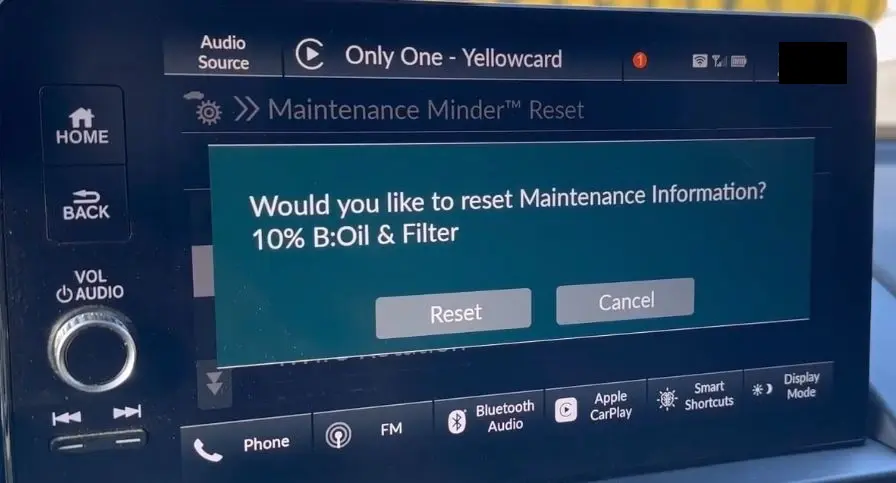
After every oil change, you need to reset the Maintenance Minder so it can begin tracking the next interval from 100%. If a shop forgets to do it — or you’re doing the change yourself — here’s how.
2023–2026 Honda Pilot (4th Gen)
Here is the quick guide to reset the oil life on a 2023–2026 Honda Pilot.
- Turn the vehicle power ON
- Press Home on the infotainment screen
- Navigate to Vehicle Settings and go to Maintenance Info
- Tap Select Reset Items
- Select the oil/filter reset option to change the oil life back to 100%.
2016–2022 Honda Pilot (3rd Gen)
Here is the quick step-by-step on how to reset the oil life on a 2016–2022 Honda Pilot using the steering wheel buttons:
- Press the Engine Start button twice (without pressing the brake) to turn the dashboard screen on
- Use the steering wheel Up/Down arrows to scroll until Oil Life is displayed on the screen
- Press and hold the Reset button on the steering wheel for about 10 seconds until the menu changes
- Use the arrows to highlight Reset, then press the Reset button to change the oil life back to 100%.
2009 – 2015 Honda Pilot (2nd Gen)
Here is the quick guide to reset the oil life on a 2009–2015 Honda Pilot (excluding Touring models) using the instrument cluster knob.
- Turn the ignition key ON (without starting the engine)
- Press/toggle the Select/Reset knob on the dashboard until Oil Life is displayed
- Press and hold the knob until the screen starts blinking
- Release the knob, then press and hold it again
- Release once more, then press and hold it a third time until the display resets to 100%.
2003 – 2008 Honda Pilot (1st Gen)
Here is the quick guide to reset the oil life on a 2003–2008 model year.
When maintenance is past due, a wrench icon will appear, and the oil percentage display will change to a negative number, showing how many miles the vehicle has been driven past the service limit.
- Turn the ignition key ON (without starting the engine)
- Press the Select/Reset knob on the dashboard until you reach the Service menu (in case you are not in the Service menu yet)
- Press and hold the knob for about 10 seconds until the entire display starts flashing
- Release the knob, then immediately press and hold it again for about 5 seconds until the negative number clears and resets to 100%.
Frequently Asked Questions
Engine oil is key to your SUV’s longevity
It’s common knowledge that changing your oil regularly is key to the health and longevity of your car’s engine.
However, oil changes shouldn’t be done haphazardly—whether in terms of the technical process or the specifications of the oil used.
The table I’ve provided above will definitely make your next oil change easier. There, you can see how much oil your Pilot needs, what type, and which brands are recommended.
At the end of the day, an oil change that costs just a few dozen bucks can save you from major repairs down the road. Fresh oil ensures your Honda Pilot will be there to accompany you on your adventures for years to come.
If you have any further questions, feel free to leave a comment below!

a cat lover, Honda driver, automotive enthusiast, and occasional photographer.
Nurjati is a proud Honda SUV owner and passionate content creator dedicated to sharing expert insights about full-size family SUVs.
His first car in school was a Honda, and she’s been in love with the brand ever since. With over 10 years of experience as a journalist and automotive blogger, Nurjati is committed to keeping enthusiasts and buyers informed and inspired.